Launching The Home Coach
The Home Coach — Home Organizing Service (Physical & Digital)
Looking for a second, independent activity, I turned a personal skill and a loose inspiration into a live, positioned, bookable service.
Solo, in a domain where I had no prior professional experience, with AI as a genuine working partner throughout.
-
5
Disciplines covered solo: research, strategy, brand, code, content.
-
Solo
No team, no client brief.
-
€75–80K
Net revenue targeted by 2027–2028.
Context
Looking for a second, independent activity, I started from a simple question: what do I actually know how to do well, outside of design?
The answer was organizing physical space. Research into the space led me to Marie Kondo's work as a reference point, not a template: a strong starting philosophy, but not a business model, a brand, or a service in itself.
- No existing brand, name, or visual identity
- No defined offer or pricing
- No legal structure to operate under
- No prior experience running a solo business
The mandate, self-assigned: turn a personal skill and a loose inspiration into a live, positioned, bookable service, solo, in a domain where I had no prior professional experience.
Approach
Setting Up the Way of Working
Before starting, drawing on earlier training (Claude 101, the AI Fluency Framework & Foundations course), asked Claude to help design the collaboration itself: rewriting the working prompts for each stage of the project, and defining a clear division of roles between human and AI, task by task, from initial concept to the live site.
The project was run against that structure rather than improvised prompt by prompt.
Research and Knowledge Synthesis
Read the core reference books, scanned the relevant pages, and fed them into Claude to convert raw material into structured, practical tool sheets: the actual working methodology behind the coaching sessions, rather than a copy of someone else's framework.
Strategy and Business Structuring
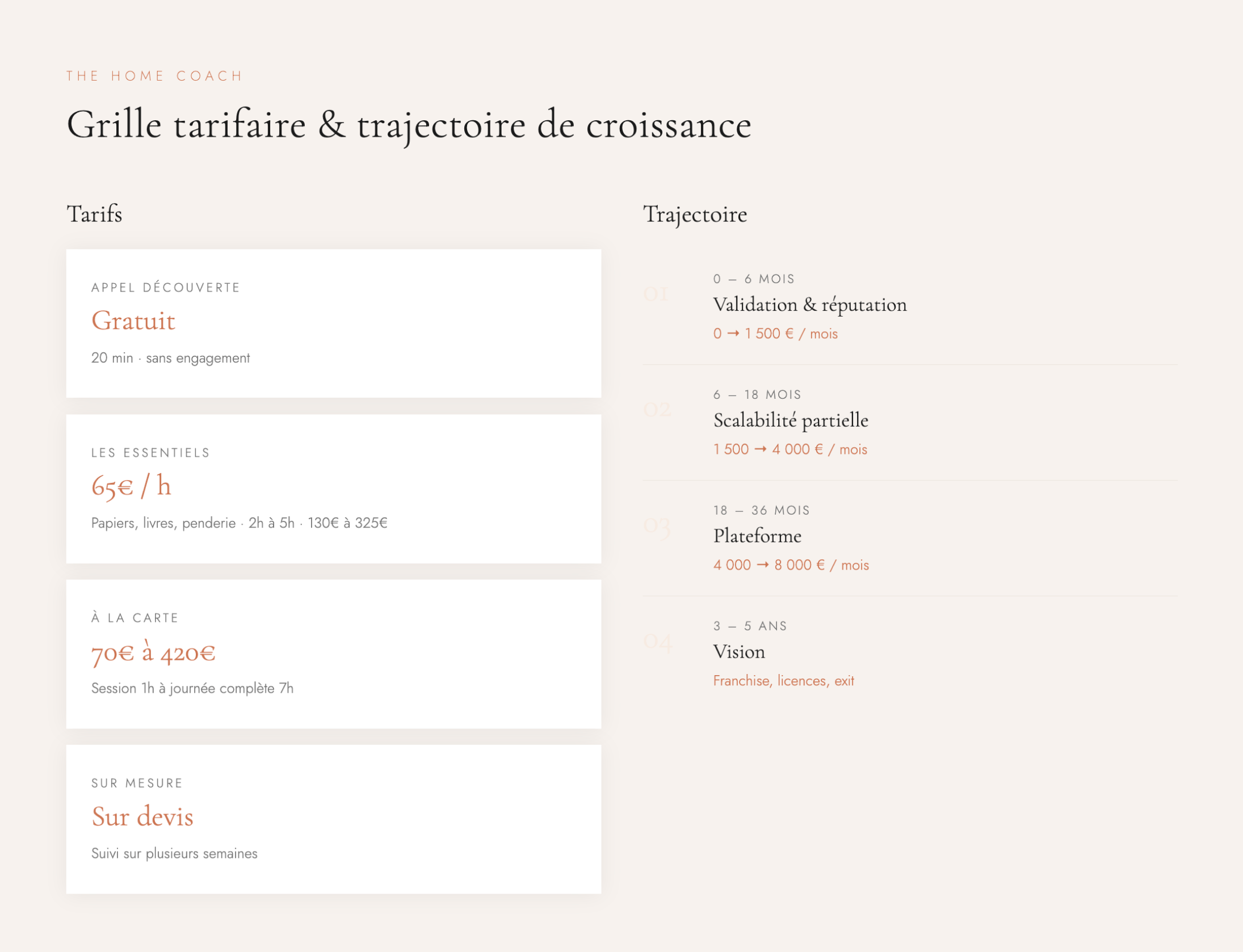
Built a full business plan with Claude: target audience segmentation (life transitions such as divorce, bereavement, moving, new parenthood, versus chronically disorganized clients), a phased two-year roadmap, pricing tiers, and a 3-year revenue projection.
Also used it to sequence the legal and administrative setup (micro-entreprise registration, professional liability insurance, accounting tools), an area entirely outside my prior experience.
Brand and Positioning
Researched competitor sites (French, UK, and US) and Marie Kondo's own web presence as reference points, and noticed a shared pattern: cluttered, multi-page sites with dense text, which sat oddly against a brand promise centered on clarity and calm.
Briefed Claude accordingly: a single-page site, clear and concise, with an empathetic tone of voice, deliberately at odds with the category norm.
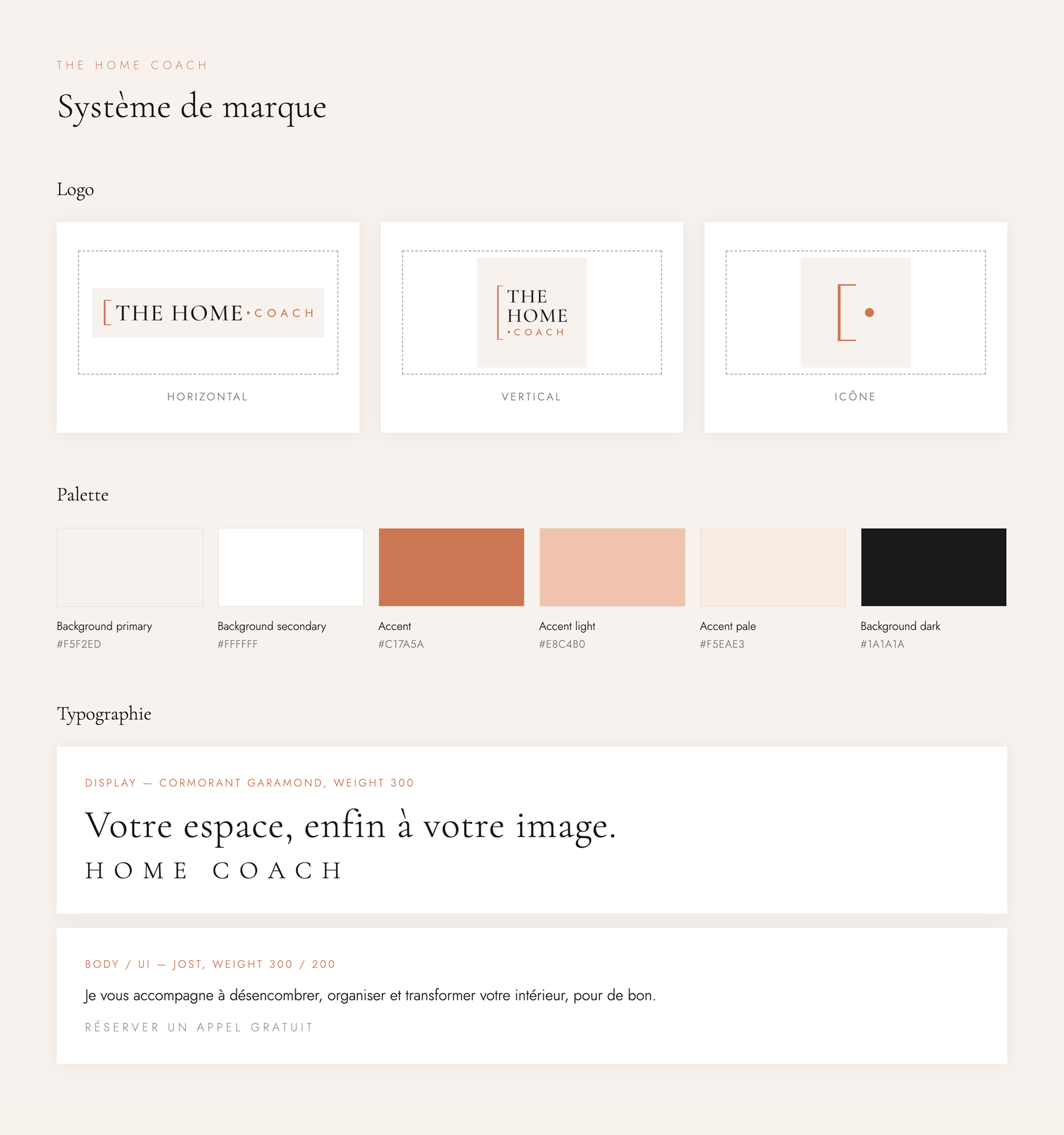
Defined the full brand system myself, name, tagline, color palette, typography rules, down to a detailed design specification, then used Figma to design the logo and the early Instagram visuals.
Building the Site
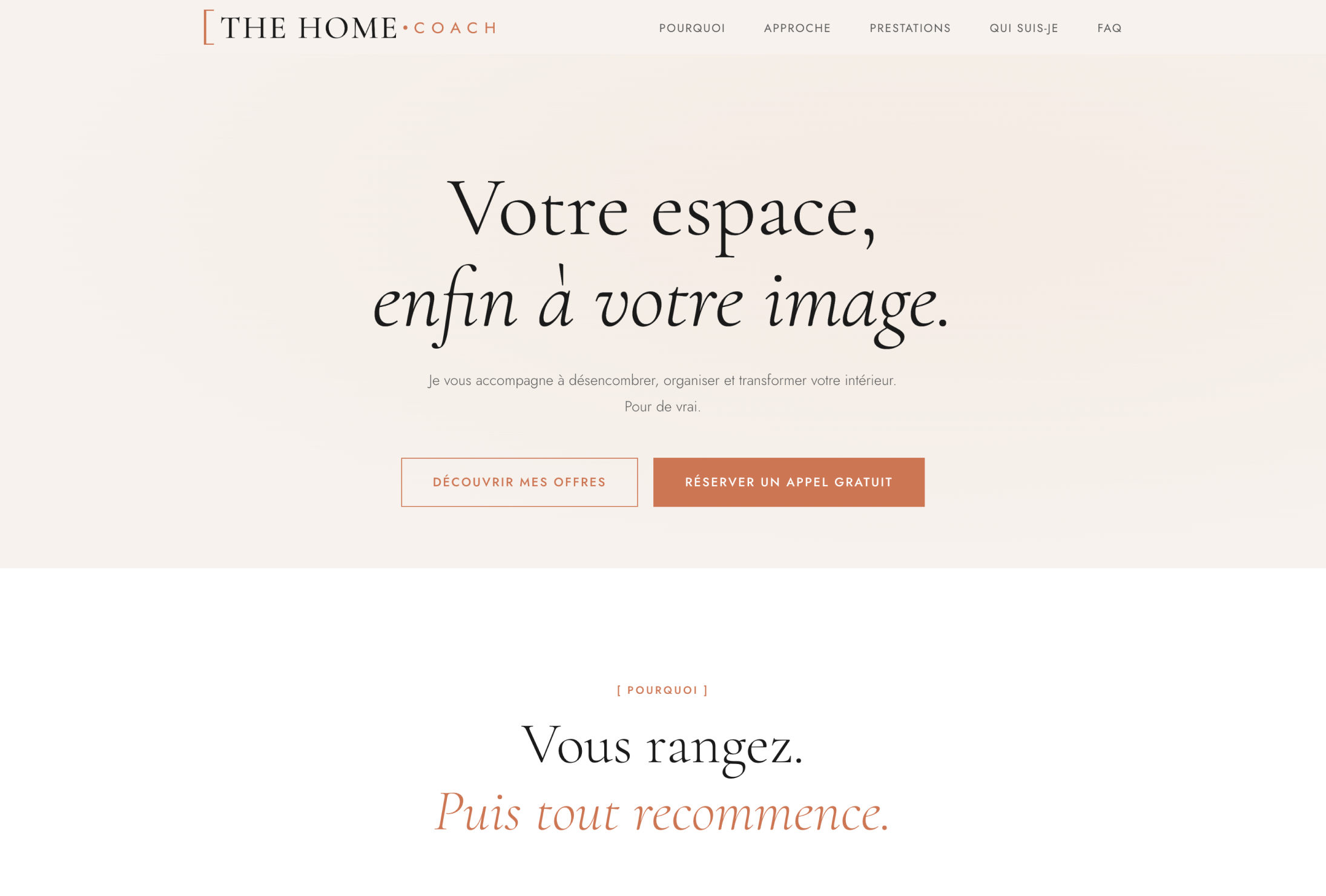
Wrote the build prompt for Lovable (drafted with the help of an AI assistant) to generate the first working version from that specification.
Then rewrote the HTML/CSS cleanly in Claude, refining it block by block to keep visual and hierarchical consistency across the whole page.
Launch Content
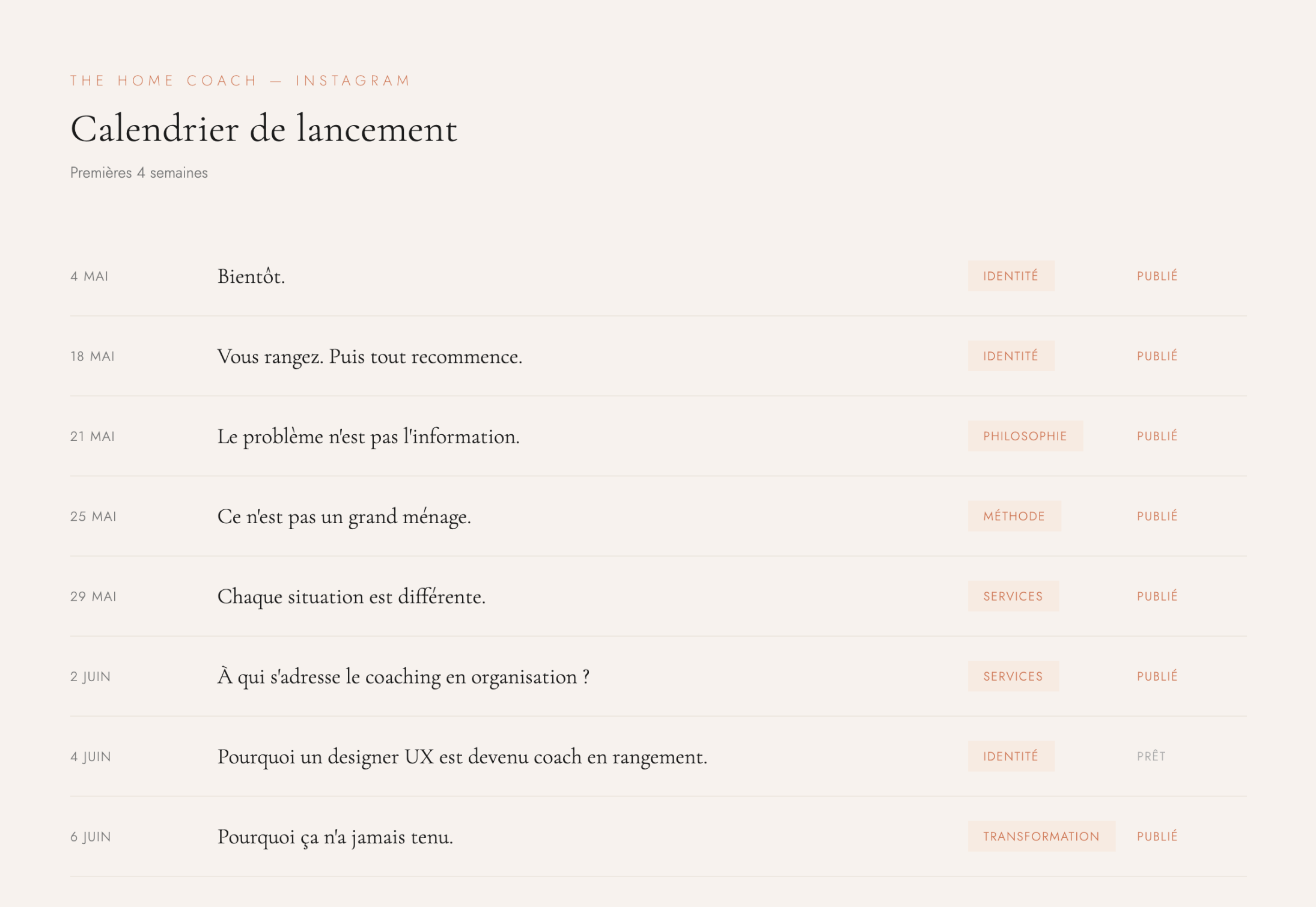
Used Claude to prepare the first Instagram content calendar and early client acquisition approach ahead of launch.
Outcomes
A live, bookable service (thehome.coach) with a physical and digital offering, launched solo in early 2026, backed by a structured roadmap rather than an improvised start.
The same underlying approach used across 20 years of product and design leadership, framing an ambiguous starting point, structuring a plan, aligning the moving pieces, and shipping, applied end to end, alone, in an unfamiliar domain, with AI used as a genuine working partner across research, strategy, design, code, and content, rather than as a single-purpose tool.